Globally, artificial intelligence (AI) is revolutionising a variety of industries, including industry, education, healthcare, and finance. Memory chips have grown in value as AI technologies continue to advance. The enormous volumes of data that AI systems need to process and store depend on these devices.
The need for high-performance memory chips has dramatically increased because to the quick development of AI applications, which has caused price increases and changes in the semiconductor sector. Businesses that depend on these chips are adjusting to growing costs, while companies producing sophisticated memory technology are investing billions to increase output.
The relationship between the AI boom and memory chip pricing, the causes of current price hikes, industry opportunities and problems, and future prospects are all examined in this article.
The AI Boom: What Is It?
The AI boom refers to the fast adoption of artificial intelligence technologies across enterprises, governments, and consumer applications. The demand for powerful processing hardware has increased due to developments in cloud computing, robotics, generative AI, and machine learning.
Large amounts of processing power are needed for modern AI models. Every AI application—from chatbots and recommendation systems to autonomous vehicles—depends on powerful processors supported by high-speed memory chips.
Memory chips are one of the most crucial parts of today’s technological environment since the requirement for better hardware keeps growing as AI becomes more complex.
Memory Chips: What Are They?
Semiconductor devices called memory chips are used to store digital data either permanently or temporarily.
The most prevalent kinds consist of:
Dynamic Random Access Memory, or DRAM
High Bandwidth Memory, or HBM
SRAM (Static Random Access Memory) and NAND Flash Memory
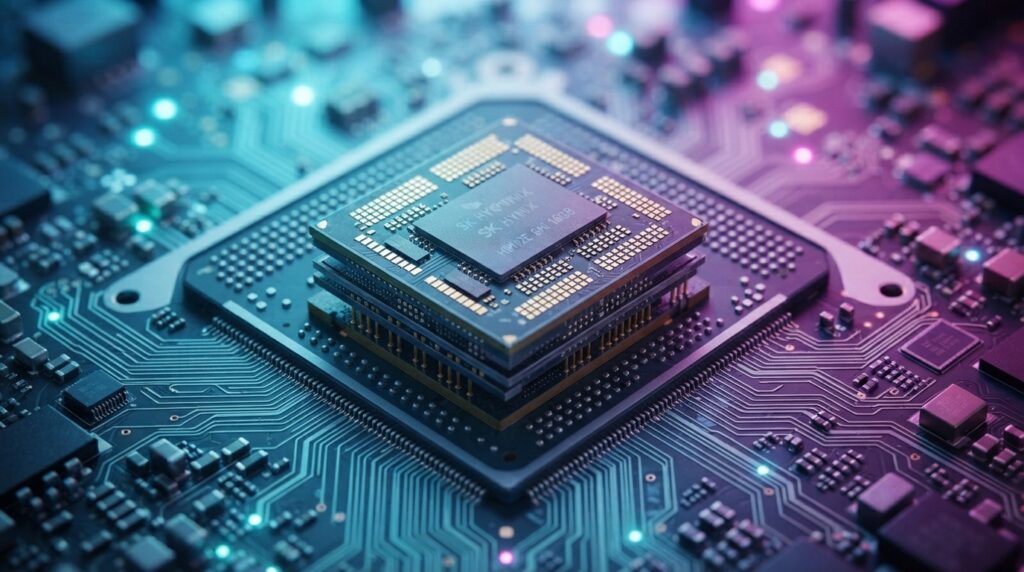
For AI workloads, High Bandwidth Memory (HBM) has become particularly significant since it allows graphics processing units (GPUs) to retrieve data considerably faster than standard memory.
The performance of AI model inference and training is enhanced by this fast data transport.
Why Are Prices for Memory Chips Rising?
The cost of memory chips is rising due to a number of variables.
- Increasing Demand for AI
The primary cause is the rapidly growing need for AI infrastructure.
For AI data centers, tech corporations are buying hundreds of GPUs, and each GPU needs cutting-edge memory chips. There is fierce rivalry among buyers as a result of this increase.
- Limited Production Capability
improved fabrication facilities costing billions of dollars are needed to produce improved memory chips.
Modern HBM and DRAM chips can only be produced in large quantities by a small number of manufacturers, which restricts supply as demand keeps growing.
- Limitations in the Supply Chain
Semiconductor production has also been impacted by geopolitical conflicts, shortages of raw materials, and interruptions in global supply chains.
Due to the complexity of semiconductor manufacturing, even minor disruptions can have considerable impact on prices.
- Data Center Expansion
Cloud providers are still constructing AI-focused data centers all around the world.
Millions of dollars’ worth of processors, servers, storage devices, and memory chips are needed for each facility, which raises market demand overall.
How AI Is Changing the Semiconductor Industry
Semiconductor manufacturing is changing in a number of ways due to the AI revolution.
Manufacturers are favouring AI-related memory devices over traditional consumer electronics.
As businesses compete to produce quicker, more energy-efficient processors, research and development spending has skyrocketed.
In order to ensure long-term supply agreements, chip manufacturers are now establishing strategic alliances with AI hardware businesses.
Memory technology is becoming as one of the most lucrative sectors of the industry as AI adoption increases.
Businesses Affected by Increasing Memory Chip Costs
Numerous industries are impacted by rising memory chip costs.
Cloud Computing
Cloud service companies raise operating expenses by making significant investments in AI infrastructure.
Electronics for Consumers
Higher component costs could result in more expensive laptops, gaming PCs, cellphones, and tablets.
Automobile Sector
AI-powered technologies for autonomous features and driver assistance are becoming more common in modern cars.
Advanced memory solutions are needed for these technologies.
Medical care
High-performance computing gear is essential for medical imaging, diagnostics, and AI-powered research.
Investment requirements may rise due to rising hardware costs.
Advantages of the AI Boom
The AI revolution has many benefits despite growing costs.
Quicker Innovation
AI speeds up scientific breakthroughs, software development, and research.
Increased Investment
In order to increase production capacity and create jobs, billions of dollars are being invested in semiconductor manufacturing.
Better Computing Performance
AI capabilities, speed, and efficiency are all enhanced by advanced memory technologies.
Economic Development
The semiconductor sector is still expanding quickly, which benefits manufacturers, suppliers, and IT firms all around the world.
Problems with Increasing Memory Chip Costs
Challenges are also brought about by the increasing demand.
Increased Costs of Production
The cost of buying components for electronics makers is rising.
Shortages of Supplies
Product introductions may be delayed by a lack of production capacity.
Higher Prices for Consumers
Electronic products are frequently more expensive due to increased production expenses.
Volatility of the Market
Price instability may result from abrupt shifts in supply and demand.
Benefits and Drawbacks
propels innovation in technology
generates fresh business prospects
enhances the performance of AI computing
increases funding for the production of semiconductors
promotes sustained digital transformation
promotes the study of cutting-edge memory technologies
Drawbacks
Increased costs for memory chips
Shortages of supplies
Higher expenses for hardware
Pressure on smaller technological enterprises
Increased reliance on a small number of producers
Uncertainty in the market at times of high demand
Outlook for the Future
Over the next ten years, industry analysts predict that demand for AI will continue to rise.
Supply is anticipated to progressively rise as semiconductor makers construct new fabrication facilities and advance production technology.
Premium memory technologies may continue to fetch higher pricing, though, since demand for AI servers, cloud infrastructure, and advanced computing is likely to stay robust.
Businesses are anticipated to gain the most from investing in next-generation memory technologies, such as enhanced DRAM and HBM.
Memory chips will continue to be one of the most important elements supporting future innovation as the AI revolution is still in its early phases.
In conclusion
The worldwide semiconductor business has undergone a fundamental transformation due to the AI explosion. Due to restricted availability, rising data center investments, and burgeoning AI applications, memory chip costs have increased in response to the growing demand for sophisticated AI systems.
Higher prices promote innovation, investment, and technical improvement even as they pose difficulties for consumers and industry. The industry is anticipated to grow more resilient as production capacity increases and new memory technologies appear.
In the end, memory chips will remain essential to artificial intelligence, making them one of the most important commodities in the digital economy.
FAQ
- What is driving up the cost of memory chips?
Because AI businesses need enormous amounts of high-performance memory to train and execute AI models, while manufacturing capacity is still restricted, memory chip prices are rising.
- For AI, which memory chip is most crucial?
Due to its exceptionally quick data transfer speeds, High Bandwidth Memory (HBM) is currently the most significant memory technology for AI.
- What impact does AI have on semiconductor firms?
AI accelerates innovation in semiconductor manufacturing, expands revenue potential, stimulates investment, and raises demand for sophisticated devices.
- Will the cost of memory chips go down in the future?
The demand for AI hardware is anticipated to stay high, although prices may level out as producers increase production capacity.
- Which sectors profit from the demand for memory chips generated by AI?
Advanced memory technologies are used in cloud computing, healthcare, automotive, finance, manufacturing, research, and consumer electronics.