Apple has always been one of the top pioneers in mobile image, and the smartphone photography market is still developing quickly. Apple promises enhanced low-light performance, smarter computational photography, better image processing, and professional-grade camera functionality for photographers and creators with the release of the iPhone 17.
However, is the iPhone 17 the greatest smartphone for photographers in 2026?
Choosing the best smartphone camera is more important than ever, whether you’re a vacation photographer, portrait artist, content developer, or just someone who likes to capture life’s moments. Traditional DSLR cameras are being replaced by smartphones in many commonplace scenarios, making camera quality one of the most crucial purchasing choices.
We’ll look at every facet of the iPhone 17 in our thorough review for photographers, from its camera hardware and AI-powered image processing to its actual photographic capabilities. We’ll also look at how it manages professional processes, night photography, macro photos, landscapes, and portraits.
After reading this article, you’ll know whether the iPhone 17 should be a part of your photographic arsenal or if another flagship smartphone would be a better fit for your artistic endeavours.
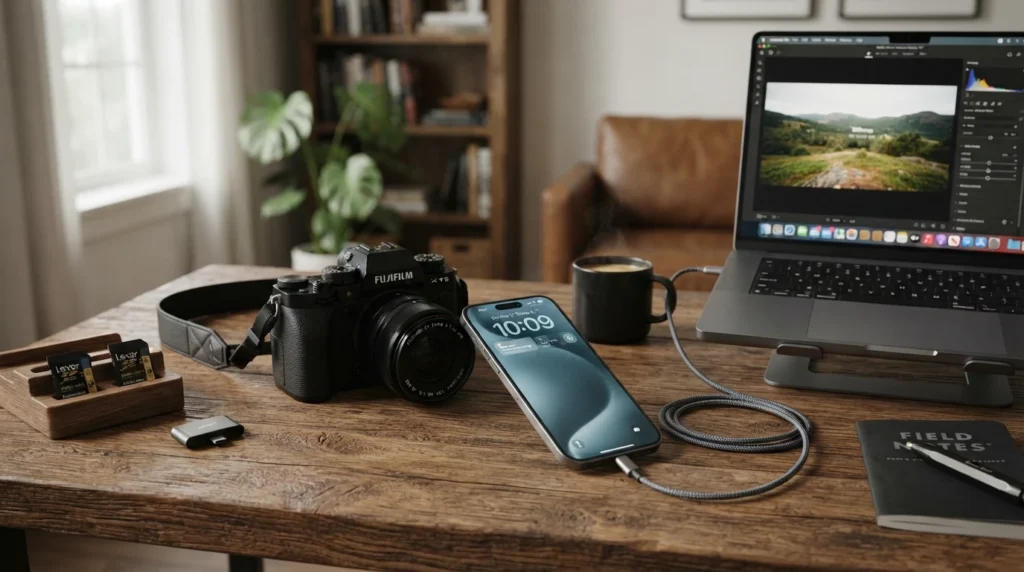
A Brief Overview of the iPhone 17
Apple considered photographers and makers when designing the iPhone 17. Even while earlier iPhone models had excellent camera systems, the most recent model concentrates on enhancing image consistency rather than just adding more megapixels.
The iPhone 17 produces crisper, brighter, and more realistic-looking images in nearly all lighting conditions thanks to its upgraded camera sensors, quicker image signal processor, Apple’s newest AI photography engine, and enhanced computational photography algorithms.
Important Highlights
enhanced primary camera sensor
Improved computational photography
Improved AI image processing
Improved photography in low light
Better representation of portraits
Quicker autofocus
Skin tones that are more natural
Expert HDR photography
Improved RAW photography compatibility and sophisticated video stabilisation
Because of these enhancements, the iPhone 17 is now among the best options for mobile photographers who prioritise image quality over just technological features.
Design and Construction Quality
With the iPhone 17, Apple keeps improving its high-end design aesthetic. The business concentrates on making the phone lighter, more comfortable to handle, and simpler to operate during prolonged photographic sessions rather than implementing a drastic makeover.
Depending on the model, the aluminium or titanium frame feels incredibly high-end and is durable enough for outdoor photography.
Grip is enhanced by rounded edges, particularly when taking street photos with one hand or in portrait mode.
Ergonomics are more important to photographers than most people realise. Longer shooting sessions with less hand fatigue are possible with a comfy phone.
Features of Photography-Friendly Design
Easy one-handed shooting
Sturdy frame for outdoor application
High-end glass finish
Better protection for camera lenses
Improved equilibrium when shooting with a handheld
Resistance to dust and water
More robust display glass
Additionally, it seems that Apple has enhanced thermal management, which keeps the phone cooler during prolonged 4K video recording and lengthy photo shoots.
Display: An Improved Viewfinder for Photographers
The display itself is one of the most disregarded features of smartphone photography.
The screen serves as your photo gallery, editing screen, and digital viewfinder.
Even in direct sunshine, composing pictures and reviewing images is made easier by the iPhone 17’s very brilliant OLED display and exceptional colour accuracy.
Accurate colours are crucial for photographers because they enable better exposure assessment before to editing.
Benefits of Display for Photography
Outside, exceptional brightness
Superb reproduction of colour
Deep shades of black
Elevated contrast ratio
HDR compatibility and seamless scrolling
Precise white balance
broad range of colours
The display offers a very realistic preview of your photos, whether you’re taking RAW photos or golden-hour landscapes.
What’s New in Camera Hardware?
Although it doesn’t always aim for the best megapixel count, Apple places a strong emphasis on computational imaging and sensor quality.
Photographers will value the iPhone 17’s numerous significant camera improvements.
Primary Camera
The system’s star continues to be the primary camera.
More light can reach each pixel with a bigger image sensor, leading to:
Increased dynamic range
Reduce the noise in the image
Enhanced acuity
More organic hues
Improved shadow detail
Photographers who capture situations indoors, at sunrise, or at sunset will see sharper photos with better-preserved highlights.
Extremely Wide Camera
The upgraded ultra-wide camera will be useful for landscape photographers.
Apple has improved edge sharpness and decreased distortion to produce landscape photos that look more realistic.
In particular, the ultra-wide lens is helpful for:
Mountains in Architecture
Property
Group shots, travel photographs, and cityscapes
Compared to earlier generations, images are far less fuzzy around the borders and remain sharp throughout the majority of the frame.
Telephoto Lens
More freedom is offered by the telephoto lens for photographers who like:
Street photography, sports, wildlife, event photography, and portraiture
Better optical zoom helps preserve image quality at longer focal lengths by lowering the need for digital cropping.
Additionally, portrait compression has a more realistic appearance and resembles a professional camera.
Front-facing camera
Vloggers and content producers will value the improved selfie camera.
Apple has made progress:
Autofocus
Consistency of exposure
HDR functionality
Accuracy of skin tone
separation of backgrounds
The front camera produces crisp, realistic-looking images whether you’re making YouTube videos or professional social media content.
Computational Photography: The Greatest Advantage of Apple
Although hardware is crucial, computational photography is where Apple really excels.
Advanced AI algorithms are used to process each image taken with the iPhone 17, combining several exposures into a single optimised picture.
This procedure aids in improving:
range of dynamic
Accuracy of colour
Sharpness
Recovery of details
decrease of noise
Tones of skin
White equilibrium
Consistency of exposure
Apple typically strives for natural-looking images that closely mimic what the human eye truly sees, in contrast to the harsh image processing found on some Android handsets.
Because of this, photographers who favour realistic shots over highly saturated ones will find the iPhone 17 especially appealing.
Daylight Image Quality
The iPhone 17 works incredibly well in bright daylight.
Images on display:
Vibrant hues
Outstanding sharpness
Equilibrium exposure
broad dynamic range
Precise white balance
Strong preservation of details
The natural textures of trees, buildings, skies, and human figures are all preserved without looking unduly manipulated.
Even when the image is zoomed in, fine details like cloth patterns, brick textures, and foliage stay sharp.
Additionally, Apple’s Smart HDR technology keeps foreground subjects appropriately illuminated while preserving cloud subtleties.
The end product is a well-balanced image that needs little tweaking before being shared or printed
Performance of Real-World Cameras
Only a portion of the tale is revealed by camera characteristics. When you use the iPhone 17 in real-world shooting situations, its actual worth becomes evident. The phone offers a dependable and consistent photography experience whether you’re taking pictures of fast-moving objects, city streets, landscapes, or portraits.
Apple has improved its picture processing to create images that look natural and require no retouching. The iPhone 17 produces well-balanced photos with realistic tones and superb detail rather than oversharpening or intensifying colours unnecessarily.
Regular photographers will value the camera’s quickness. It is easier to catch ephemeral moments since the shutter response is almost instantaneous, autofocus locks fast, and image processing completes in a matter of seconds.
Strengths of Real-World Photography
Quick shutter reaction
Dependable autofocus
Outstanding consistency in exposure
Precise reproduction of colour
Skin tones that are natural
Very little shutter lag
Fast processing of images
Results that are consistent under various lighting circumstances
Photographing Portraits
One of Apple’s greatest strengths has always been portrait photography, and the iPhone 17 carries on this legacy with observable enhancements.
More precise edge recognition around clothing, accessories, and hair is produced by the improved portrait mode. Cleaner background separation and a more polished depth-of-field impression are the outcomes.
Artificial blur looks softer and more realistic than previous smartphone generations, more like pictures taken with specialised mirrorless cameras.
Highlights of the Portrait
Improved face detail
Enhanced precision of skin tone
Background blur that seems natural
Improved separation of subjects
Quicker autofocus eye detection
More precise lighting effects
For professional portrait photographers in particular, it is crucial that skin textures maintain their detail without becoming unduly smooth.
The iPhone 17 regularly produces excellent portrait images, whether you’re taking pictures of clients, relatives, or social media content.
Photographing landscapes
The upgrades to the primary and ultra-wide cameras will be appreciated by landscape photographers.
In sunny skies, the bigger sensor preserves highlight information while capturing more detail in shadows.
One of the iPhone 17’s greatest advantages is its dynamic range. They perform remarkably well even in challenging scenarios with intense sunshine and dark foregrounds.
Performance of the Landscape
When taking pictures, the camera works especially well:
Beaches, lakes, forests, mountains, and national parks
Skylines in cities
Landmarks in architecture
Scenes of sunrise and sunset
Pictures have natural, vivid colours that don’t seem overly saturated.
Even at full resolution, fine textures like distant buildings, grass, trees, and rocks stay sharp.
Additionally, the enhanced ultra-wide lens lessens distortion close to the edges, resulting in compositions that are more harmonious.
Street Photography
Street photographers want a camera that is reliable, quick, and discrete. All three criteria are met by the iPhone 17.
Because of its small size, photographers may capture genuine moments without attracting unwanted attention.
While Smart HDR guarantees balanced exposures in shifting light situations, Autofocus is fast enough to lock onto moving subjects.
This makes the iPhone 17 a great daily camera for trip photographers and documentarians.
Why It Will Appeal to Street Photographers
Design that is lightweight
Quick camera launch
Shooting in silence
Precise autofocus
Dependable exposure
Outstanding stabilisation of images
Excellent one-handed usability
Photography in Low Light
One of the main areas where smartphone cameras frequently falter is night photography. With the iPhone 17, Apple has significantly improved low-light performance.
While Apple’s computational photography engine cleverly blends several exposures to lower noise and enhance clarity, the bigger picture sensor captures more light.
The camera preserves the scene’s natural ambiance rather than creating artificially brilliant nighttime photos.
Enhancements to Night Photography
Improved shadow detail
Diminished digital noise
Enhanced precision of colour
Quicker processing in Night Mode
Images that are brighter without being overexposed
Improved detail in dimly lit settings
Neon signs, streetlights, and cityscapes minimise undesired flare while maintaining their natural colours.
The iPhone 17 provides consistent low-light performance for photographers who often take pictures of events, concerts, or city streets after sunset.
Macro Imaging
The iPhone 17 excels in macro photography, which has grown in popularity among smartphone users.
When a subject is close, the camera automatically enters macro mode, enabling photographers to capture minute details and complex textures.
Top Topics for Macro Photography
Blooms
Insects
Jewellery
Photography of food
Product photography
Textures: Leaves
Tiny ornamental items
Both novices and experts can enjoy macro photography since the images stay clear and have a pleasant background blur.
RAW Photography and Editing Process
Because RAW maintains a lot more image data for post-processing, professional photographers frequently favour shooting in RAW.
With continued support for Apple ProRAW, the iPhone 17 gives photographers the freedom to refine their images using a variety of professional photo editing applications, including:
For photographers who enjoy post-processing, the iPhone 17 integrates smoothly into professional editing workflows and supports a wide range of industry-standard photo editing applications, giving creators the flexibility to fine-tune RAW images with precision.
RAW files provide you more control over exposure, white balance, and colour grading because they keep more highlight and shadow information.
This makes the iPhone 17 a useful tool for professional workflows for creators who regularly alter their images.
Features of AI Photography
The camera technology of the iPhone 17 heavily relies on artificial intelligence.
Apple’s AI focuses on enhancing technical image quality while preserving a natural appearance rather than drastically changing photographs.
Features Driven by AI
Recognising intelligent scenes
Intelligent HDR processing
AI-powered noise reduction
Advanced optimisation of skin tone
White balance adjustment that happens automatically
Optimisation of exposure
Subject identification
Processing of semantic images
Photographers may concentrate on composition instead of technical settings thanks to these features, which operate automatically in the background.
Performance of Video Recording
While photography is the main topic of this assessment, many photographers also produce video content.
With outstanding stabilisation and cinematic image clarity, the iPhone 17 offers professional-caliber video recording.
Features of Videos
4K video capture
Optical stabilisation that is smooth
Support for HDR videos
Cinematic video format
Outstanding autofocus tracking
Superior stereo microphones
Science of natural colour
The stabilisation mechanism greatly lessens handheld tremor, which makes it perfect for social media video, documentaries, and trip vlogging.
Battery Life for Taking Pictures
Smartphone batteries can be rapidly depleted by photography, particularly when taking RAW photos or capturing high-definition video.
Thankfully, the iPhone 17 has better power efficiency.
With moderate camera usage, the iPhone 17 easily lasts through a full day of photography, reducing the need to recharge frequently.
Even while taking long outside photos, battery performance stays consistent.
Strengths of Batteries
Effective image processing
Improved thermal control
Extended periods of filming
Support for fast charging
dependable backup performance
This is a wonderful upgrade for vacation photographers who spend a lot of time outside.
Creative Professionals’ Performance
For duties linked to photography, the most recent Apple processor offers more than enough computing power.
Video export, AI processing, RAW editing, and image rendering all feel incredibly fluid.
Professional apps start up fast, and switching between social media, cloud storage, and editing tools is easy.
Even when processing large ProRAW files, the iPhone 17 maintains smooth performance without noticeable slowdowns.
Benefits and Drawbacks
Advantages
Excellent overall camera quality
Superb computational photography
Reproduction of natural colours
dependable autofocus functionality
Better photography in dim light
Expert ProRAW assistance
Superb OLED display
Quick overall performance
Superior construction quality
Extended software support
Excellent battery optimisation
Cons of industry-leading video recording
Not every budget can afford premium pricing.
restricted manual camera controls in contrast to some specialised camera applications
Compared to cameras with interchangeable lenses, optical zoom still has practical limits.
Storage can be rapidly depleted by heavy RAW photography.
For specialised work, professional photographers can still favour a specialist camera.
Who Should Purchase the iPhone 17?
For consumers who value camera quality, dependability, and usability, the iPhone 17 is a great option. Both casual users and creative experts can utilise Apple’s camera system since it has been tuned to generate consistent, natural-looking photographs with little effort.
Photographers for Travel
A lightweight, dependable camera that works well in a variety of settings is essential for travel photographers. With its quick focusing, long battery life, dependable picture stabilisation, and exceptional HDR performance, the iPhone 17 is a useful travel companion that doesn’t require bulky gear.
Content Producers
The iPhone 17 offers a full package if you frequently produce material for Facebook, YouTube, Instagram, TikTok, or your own blog. Creators can create polished content right from their smartphone thanks to Apple’s image processing, professional-grade video recording, and high-quality pictures.
Photographers of Portraits
The enhanced skin tone rendering, realistic background blur, and precise subject identification will be appreciated by portrait photographers. With remarkable detail and well-balanced exposure, the camera creates portraits that appear natural.
Influencers on Social Media
Influencers frequently require a gadget that can take pictures and videos that need little editing before being posted. The iPhone 17 is perfect for upholding a professional internet presence because it produces vivid yet realistic photographs.
Regular Users
Impressive outcomes can be attained even by people with minimal photographic knowledge. In most cases, Apple’s computational photography produces high-quality photographs by automatically adjusting exposure, white balance, and dynamic range.
Who Shouldn’t Use the iPhone 17?
Despite being among the greatest smartphone cameras on the market, the iPhone 17 might not be the best choice for everyone.
You might want to think about using a different device if:
For wildlife photography, you need a very high optical zoom.
You often use long telephoto lenses to capture professional sporting events.
You don’t need little camera upgrades because you already own a new flagship iPhone.
You prefer the full manual camera controls available on DSLR or mirrorless cameras.
You can get comparable outcomes with previous flagship smartphones if you’re on a tight budget.
Dedicated interchangeable-lens cameras continue to provide more versatility for specialised commercial photography.
Comparing the iPhone 17 with Other flagship camera phones
Samsung Galaxy S Series vs. iPhone 17
While Samsung frequently creates brighter, more saturated images, the iPhone 17 typically offers more consistent image processing and more realistic colour reproduction. Additionally, Apple continues to have an edge in ecosystem integration and video capturing.
Ideal for:
Natural hues
Expert video
dependable constancy of images
Google Pixel vs. iPhone 17
The superior computational photography and AI editing capabilities of Google Pixel phones are well-known. With its improved video capabilities, balanced picture processing, and seamless performance across Apple devices, the iPhone 17 is a fierce competitor.
Ideal for:
Portraits of nature
Producers of videos
Long-term assistance with software
Professional Mirrorless Cameras vs. iPhone 17
Even though the iPhone 17 takes amazing pictures for a smartphone, professional mirrorless cameras still provide:
Bigger sensors
Interchangeable lenses
Improved performance in low light
Increased dynamic range
Better optical zoom
Complete manual controls
However, the iPhone 17 is much more practical for social media material, daily photography, and travel.
Final Decision
Another noteworthy advancement in smartphone photography is the iPhone 17. Apple has focused on enhancing the overall photographic experience through improved sensors, sophisticated computational photography, and intelligent AI processing rather than just increasing megapixel counts.
In daylight, portrait, landscape, and low light, the image quality is constantly outstanding. Autofocus is quick and reliable, dynamic range is great, and colours stay realistic.
The iPhone 17 is among the best options for photographers looking for a dependable, portable camera.
The iPhone 17 is more than capable of handling trip photography, portraits, street photography, product photography, and content creation, even if professional photographers may still need specialised cameras for some tasks.
Overall Rating
| Category | Rating |
|---|---|
| Camera Quality | ⭐⭐⭐⭐⭐ (5/5) |
| Portrait Photography | ⭐⭐⭐⭐⭐ (5/5) |
| Landscape Photography | ⭐⭐⭐⭐⭐ (5/5) |
| Night Photography | ⭐⭐⭐⭐☆ (4.5/5) |
| Video Recording | ⭐⭐⭐⭐⭐ (5/5) |
| Battery Life | ⭐⭐⭐⭐☆ (4.5/5) |
| Display | ⭐⭐⭐⭐⭐ (5/5) |
| Performance | ⭐⭐⭐⭐⭐ (5/5) |
| Value for Photographers | ⭐⭐⭐⭐☆ (4.5/5) |
Overall Score: 4.8/5
FAQ
- Can professional photographers use the iPhone 17?
Indeed. While dedicated cameras are still superior for specialised photography, it provides outstanding image quality, ProRAW support, and dependable performance for numerous professional processes.
- Is RAW photography supported on the iPhone 17?
Indeed. Photographers may take pictures with greater editing freedom thanks to Apple ProRAW.
- In terms of photography, is the iPhone 17 superior to the iPhone 16?
Improvements in picture processing, autofocus, low-light performance, and AI-powered photography tools are all included in the iPhone 17.
- Can you take landscape photos with the iPhone 17?
Of course. It’s a great option for landscapes because of the upgraded HDR and ultra-wide camera.
- Can a DSLR be replaced by an iPhone 17?
In many circumstances, it can take the place of a DSLR for regular photography, travel, and content production. Dedicated cameras continue to provide benefits for sports or commercial photography.
- What is the performance of Night Mode?
Night Mode preserves the scene’s original ambiance while taking clearer, brighter photos with less noise.
- Can creators benefit from the selfie camera?
Indeed. Reliable autofocus, precise colours, and crisp photos are all provided by the front camera.
- Is 4K video compatible with the iPhone 17?
Indeed. It captures crisp, well-stabilized 4K video.
- Is there enough battery life for taking pictures?
Indeed. Under typical photography usage, the majority of people may shoot throughout the day with ease.
- Which photographers ought to get the iPhone 17?
Vloggers, influencers, travel photographers, portrait photographers, content producers, and regular photographers.
- How well does the iPhone 17 function in low light?
Indeed. Realistic lighting is maintained, noise is decreased, and detail is enhanced with the bigger sensor and AI-powered processing.
- What is the purpose of the ultra-wide camera?
Indeed. It is perfect for group photos, interior design, architecture, and landscapes.
- Does the iPhone 17 overprocess images?
No, Apple often prefers realistic image processing and natural colours.
- Can social media creators benefit from the iPhone 17?
Of course. With little processing, images and movies are prepared for sharing.